News


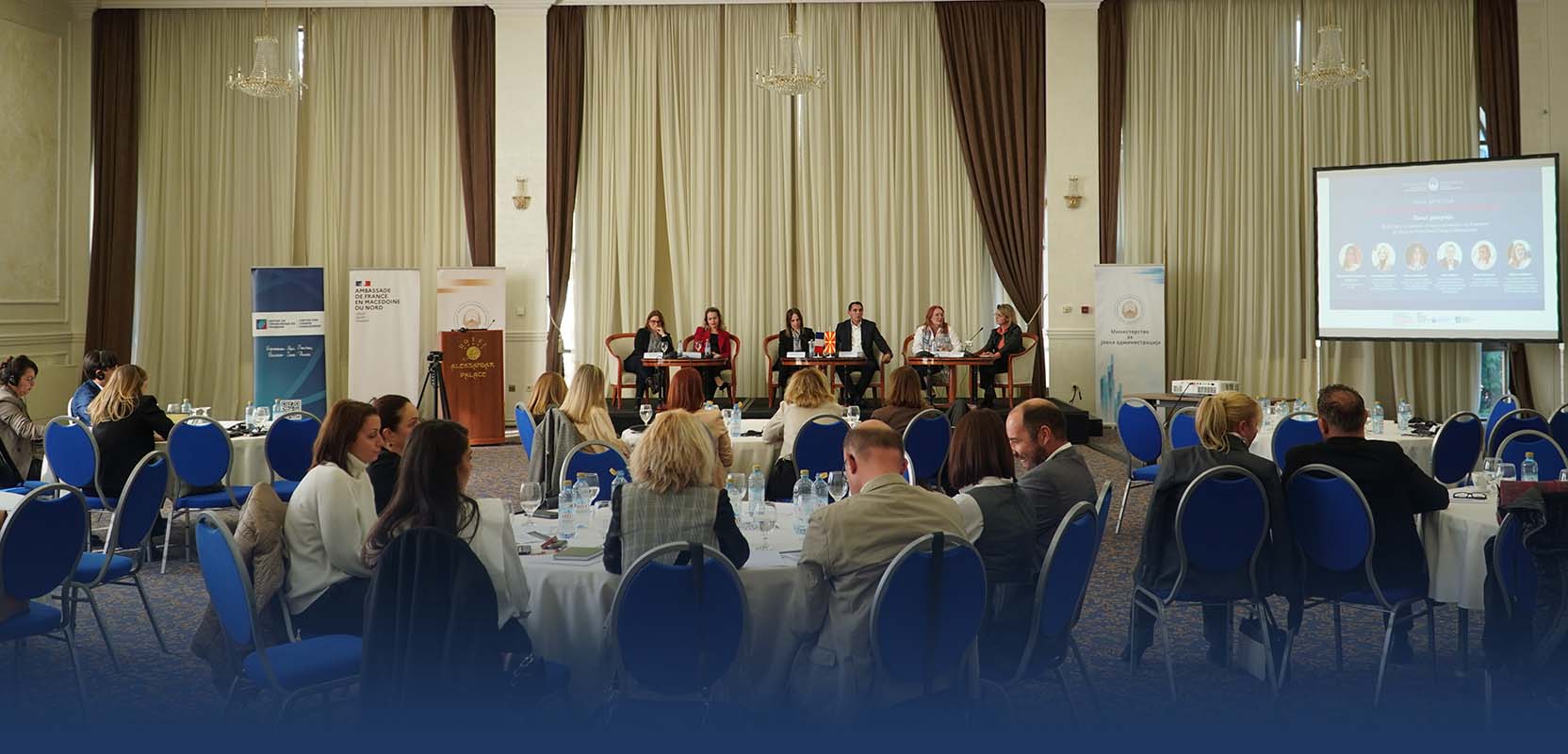
Discussion on the modalities for establishing an Academy for professional development of administrative officials
Date: 28.10.2025
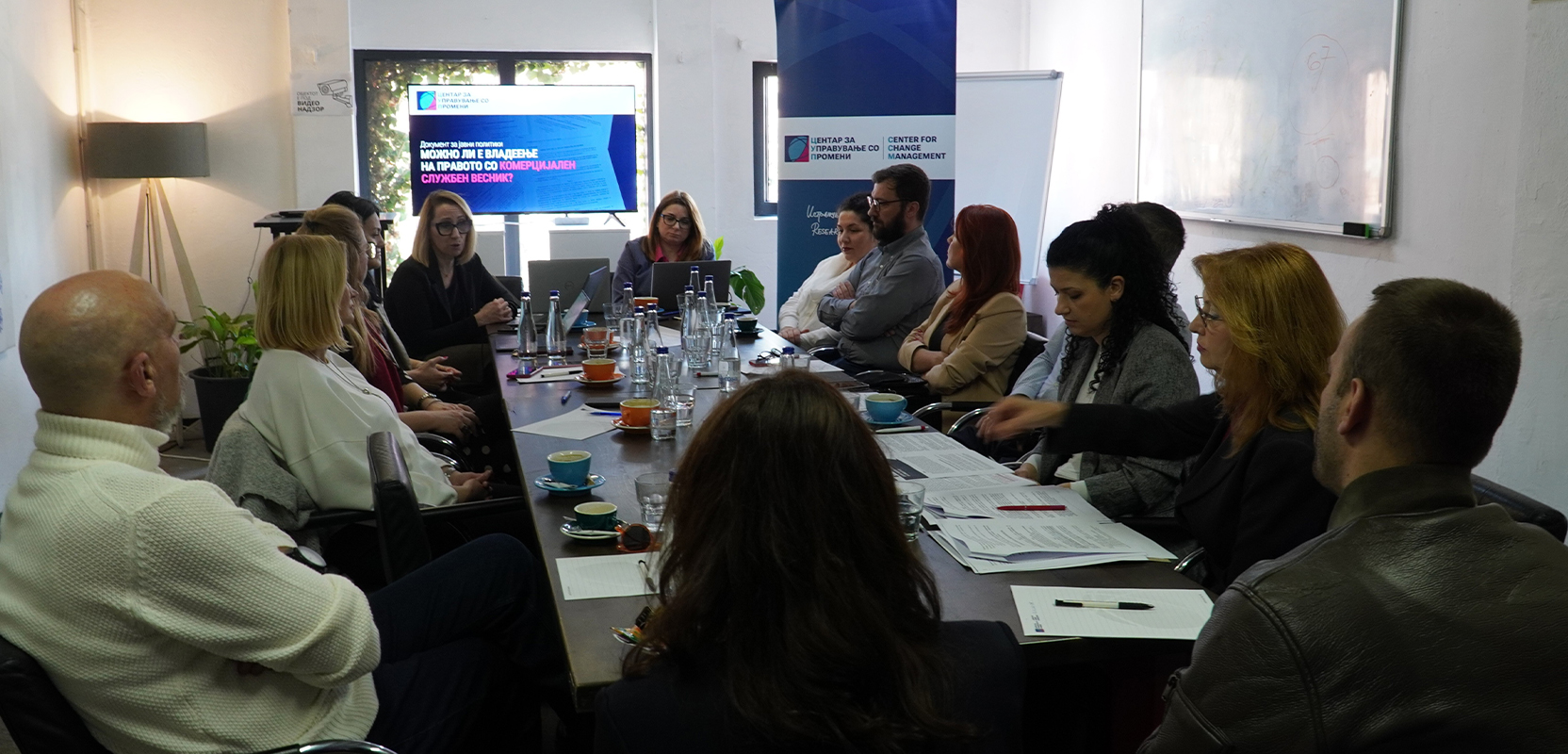
On 28.10.2025, we held an event to discuss the vision and modalities for establishing the Academy for Professional Development and Training of Civil Servants, together with representatives from central institutions and experts in the field of public administration.
The event was opened with addresses by the Minister of Public Administration, Goran Minchev, the Ambassador of the Republic of France H,E. Christopher Le Rigoleur and the Executive Director of the CUP Neda Maleska Sachamaroska.
After the welcoming addresses, representatives from the General Directorate of Administration and Civil Service of France (DGAFP) gave their presentations, introducing the attendees to the structure of public administration in France.
The first panel on the topic "International Experiences and National Priorities" was moderated by the CUP Program Coordinator Iskra Belcheva Ristovska, and presentations were made by experts in the field of public administration and public management, who presented the experiences of several countries regarding the model of training of administrative servants. This panel featured speakers Neda Maleska Sacmaroska, Esma Adilović Falić, Jean-Michel Eymeri-Douzans and Natalija Šikova.
Prof. Dr. Jean-Michel Eymeri-Douzans, from Scinces Po in Toulouse, shared his experiences from the French civil service training system and emphasized that “a good training system is needed in the public sector, especially so that young staff can develop professionally and become highly skilled individuals who will serve the state. Managerial staff should also undergo training to check and strengthen their competencies. But at the end of the day, culture, or administrative culture, is key. Civil servants should be aware that training is part of their personal development and the development of the administration.”
Prof. Dr. Natalija Šikova, from the International Balkan University in Skopje, presented the attendees with the different systems for training civil servants with a special focus on the systems in Germany, Italy and France, and according to a comparative analysis of the modalities for establishing an Academy for professional development of administrative servants. In addition to sharing experiences from European countries, in the discussion Prof. Šikova emphasized that "a distinction should be made between university knowledge and professional training. The work of the Academy should be focused on competencies and skills, not theory. Of course, there should be a theoretical basis, but practical knowledge should take precedence and the lecturers at the Academy should not be academic staff, but people from practice. The training should not be theoretical like at the faculties, and the students should receive specific and practical skills and knowledge that will be useful in their work."
Dr. Neda Maleska Sacmaroska, Executive Director of the CUP, presented in more detail the characteristics of the British model for training and professional development of administrative officials and focused on the need to follow trends in the digital sphere, emphasizing that "in such a new and dynamic reality, public administration will have to adapt and finally understand that institutions must cultivate a culture of learning and enable their employees to develop new competencies. Hence, management structures should not view education, training and other forms of learning solely as an expense, but as an investment with the highest return, an investment in the future of the state."
Esma Adilović Fazlić, Head of the Public Administration Reform Service at the Ministry of Public Administration, referred to the future steps towards establishing the Academy and stressed that “We will not immediately reach the British and French models, but we are on the right track and have a good start. The Academy aims to strengthen the knowledge and competencies of administrative officials and consequently create a competent public administration as a whole that will deliver better results. However, the staff at the Academy and the trainers will be key to the efficient achievement of this goal.
The second panel on the topic “Experiences on the functioning of existing training for public sector employees” was moderated by the project coordinator of the CUP Aneta Ivanova Stojanoska, and presentations were made by representatives of central institutions that deliver training for public sector employees in specific areas. Aleksandra Lulkoska, Rita Gligorijevska, Vesna Novaković, Gabriela Madžoska and Agron Medžiti spoke within this panel.
The participants of this panel presented the ways in which they organize education of civil servants, but also of a wider group of people, in specific areas (public finances, taxes, public procurement and gender equality). Aneta Ivanova Stojanoska, project coordinator at the CUP, concluded this panel by reminding that "the training system in the public sector in our country is dispersed in several institutions that deliver training in specific areas. With the establishment of the Academy for Professional Development and Training of Public Administration

Str.Mitropolit Teodosij Gologanov no.34a,
1000 Skopje, North Macedonia
Tel: +389 2 6092 216
e-mail: info@cup.org.mk