News


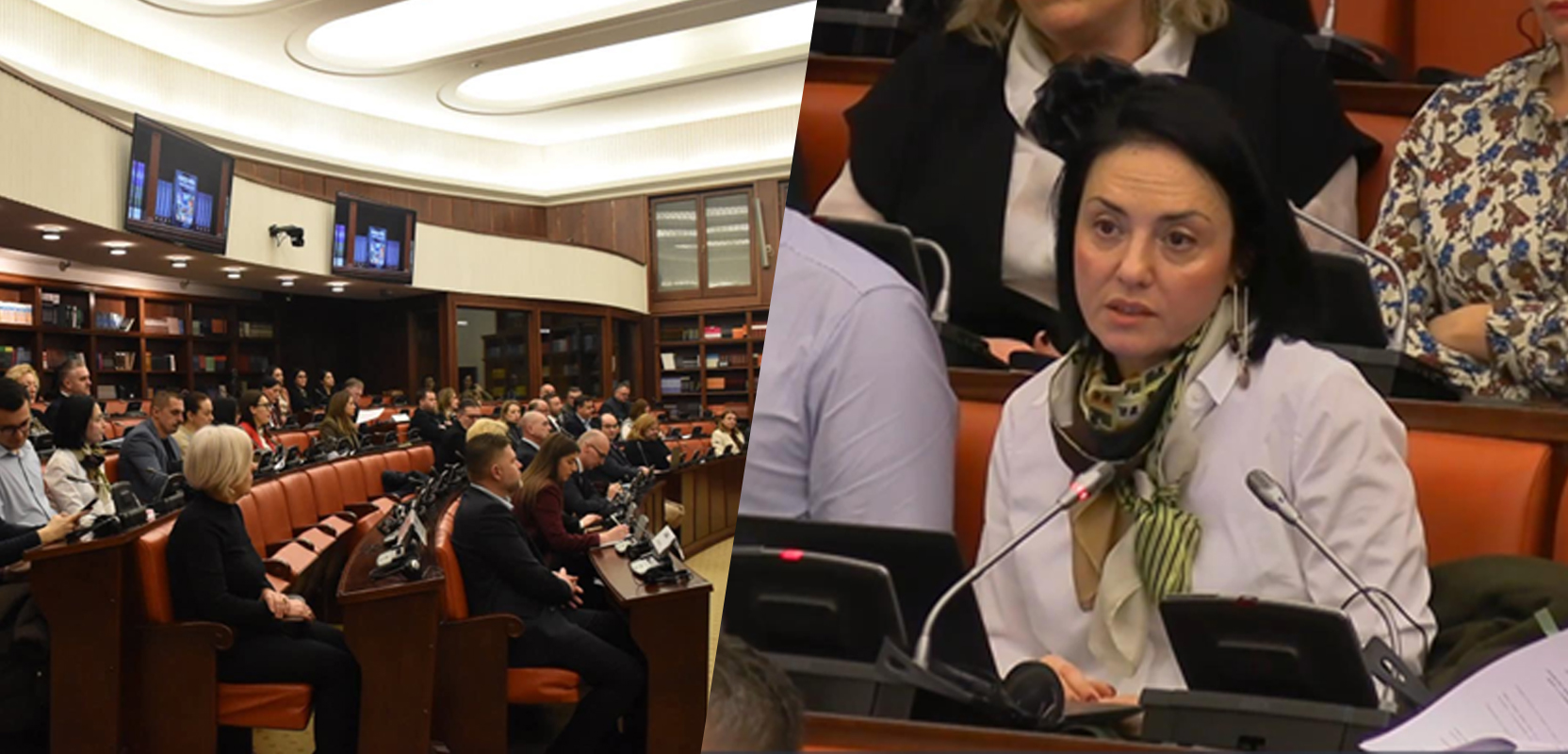
Public debate on the Law on Senior Managers in the Parliament of the Republic of North Macedonia
Date: 19.02.2026
On 18.02.2026, a public debate was organized in the Parliament of the Republic of North Macedonia regarding the draft Law on Senior Managers of State Administration Bodies and Funds, at which MPs, representatives from the academic and civil sectors had the opportunity to express their views, opinions, criticisms and recommendations for the draft law.
The program coordinator of the CCM, Iskra Belcheva Ristovska, also gave a presentation at this public debate, highlighting the following elements of the draft law:
- First, the law prescribes a procedure that guarantees an objective assessment of the competencies of candidates for senior managers and transparency of the selection and election procedure.
- Second, for the first time, an explicit obligation to provide a detailed explanation of the selection decisions is prescribed, which significantly reduces the discretion of the Government, strengthens its accountability to the citizens and strengthens the legal certainty of all registered candidates. By publishing the explanations, we are taking a step towards restoring the credibility of the process. This is exactly what we want to see in the long term – procedures that we will also evaluate as objective, plus managers who will deliver reforms, a system and institutions that citizens trust.
- Third, the law finally sets a framework for monitoring the work and success of senior managers. For employees in the public administration, such an obligation and a system for evaluating their performance has existed for a long time, but not for those who are supposed to lead, organize and inspire them. We set a similar obligation for ministers with the Government's Rules of Procedure from December 2024. The amendments to which we supported within the framework of the Rethinking Governance project. According to the Rules of Procedure, they have an obligation to report on the implementation of the strategic priorities of the Government's Work Program in the areas for which the ministry is responsible. The missing link in the responsibility for the implementation of policies, and more importantly, reforms, were senior managers, whose work and success will be assessed according to measurable indicators with this law.
Finally, the program coordinator reminded that the focus is often placed on the people who will be placed in these positions, and not on the effect of this reform. “For citizens outside this room, the law is interesting now, but in a month, a year and more, it will not matter who sits in the institutions, but what results and reforms it delivers in their interest, the citizens.”
The public administration reform is a key, continuous process, the aim of which is to improve its operation and functioning and to improve the lives of citizens and the business climate in the country. One extremely important aspect of the public administration reform is the improvement of the management of institutions, which is the subject of this law.
The development of the law and bylaws is supported within the framework of the project “Reinventing Governance” and in its current form it definitely has the potential to be a pillar of depoliticization and professionalization.
The project "Reinventing Governance" aims to improve the policy-making system, through better coordination between key institutions in the executive branch, i.e. the so-called Center of Government, and towards creating policies based on objective evidence and data, improving strategic planning as a basis for the work of institutions, but also establishing responsibility and accountability for the delivery of policy results. The project is implemented by the Center for Change Management (CCM), with support from the Government of the United Kingdom through the British Embassy in Skopje.


Str.Mitropolit Teodosij Gologanov no.34a,
1000 Skopje, North Macedonia
Tel: +389 2 6092 216
e-mail: info@cup.org.mk