Strategic planning in the public administration






![]() Programme goals
 Programme goals
The aim of the training is to understand and practice strategic planning as one of the key competencies of the management of the institutions that are expected to possess them. The strategy as a tool determines the direction in which the organization / institution will move and establishes the vision for change.
During the training, the participants acquire practical skills on how to prepare a strategic plan in accordance with government priorities, through effective leadership, more efficient operational planning and resource utilization, and the potential they have.
![]() Contribution towards development of knowledge, skills and competences
 Contribution towards development of knowledge, skills and competences
At the end of the training the participants will:
- Gain knowledge about various tools for effective strategic planning, in accordance with the best European practices in combination with the guidelines for strategic planning in the administration of RSM
- Various mechanisms of strategic thinking will be applied to analyze the situation in the environment
- Be able to choose strategic measures that will provide them with a competitive advantage
- Know how to define goals and indicators of success (Key Performance Indicators KPI’s)
- Understand the importance of using data and doctrines in establishing targets.
- Master the tracking system to ensure better implementation of the measures.
![]() Programme content
 Programme content
- Identification of vision, mission and values in the process of strategic planning
- Problem analysis, analysis of evidence and analysis of key issues and dilemmas in the sectors of action (group work)
- Defining and mapping key actors and partners (institutions, citizens' associations, business entities and other stakeholders) and preparation of the Institutional Program
- Analysis of the external environment and definition of factors that affect the strategy (group work
- Preparation of the SWOT analysis and the matrix of priorities (group work) and the SOR matrix of strategic orientation
- Risk analysis, building risk management strategies
- Determining goals, activities and indicators of influence (group work)
- Internal processes - current internal processes, problems that may arise and improvement and changes in the internal processes of the institution - defining measures activities to strengthen capacity (group work)
![]() Trainer
 Trainer
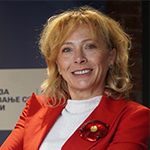
Neda Maleska Sachmaroska
Dr. Neda Maleska Sachmaroska is the founder and Executive Director of the Center for Change Management (CCM). She possesses over 25 years of professional experience in organizational and institutional development, strategic leadership, change management, human resource development, and the enhancement of organizational performance. As an experienced consultant, trainer, and facilitator, she has designed and delivered more than 500 training sessions, workshops, and expert dialogues across the Western Balkans. She has also provided numerous consultancy services in areas such as strategic management, leadership, human resource management, organizational culture, performance management and KPIs, quality, integrity, and ethics. She holds a PhD in Organizational Sciences and Management—with a focus on results-based management—as well as a Master’s degree in Social Policy and a degree in Psychology. Her international professional certifications include PRINCE2 Practitioner (project management), CAF Trainer, Coach, and Assessor (EIPA), and Internal Auditor certifications for ISO 9001 and ISO 14001. She continuously enhances her expertise through specialized programs in leadership, management, organizational development, and "train-the-trainer" initiatives, delivered by renowned international institutions—including Stanford University, the National School of Government, EIPA, PAI, APMG International, Investors in People UK, MDF, ECORYS, IPA, OXFAM, Mansel & Rankin, NI-CO, and Westminster Ltd. Her approach integrates organizational psychology, modern management practices, and practical learning, transforming knowledge into actionable solutions, developed competencies, and measurable results for organizations.
Related programmes
Budget participation in Local Self-Government units
Budget participation is used with the intention of improving the practice and participation of local stakeholders in the local budgeting process and increasing the efficiency of municipal spending. Also, the process facilitates the participation of citizens in the decision-making process at the local level in order to improve local responsibility, quality of local services and quality of life.
The purpose of the training is to improve and expand the knowledge and skills of employees in local municipalities on the benefits of budget participation which in this way will gain the opportunity to meet the needs and requirements of citizens and increase their rating in terms of transparency. and the ability to create a budget that will be intended for the needs and in accordance with the requirements of all stakeholders operating in the territory of their municipality. On the other hand, the training will raise awareness among citizens about how the municipality works and builds its budgets and how public money is spent. In one it gives the opportunity to the citizens to give their contribution and to be involved in the process of budget participation and thus indirectly influence the increase of the quality of their life.
Methodology for conducting functional analysis
The aim of the program is for the participants to understand the Functional Analysis as a process for obtaining a realistic and complete picture of the readiness of the institution to implement the necessary improvements in a short and medium term to better perform its basic functions. The FA should review the efficiency and effectiveness of the performance of the work and work tasks within the internal set-up, as well as the distribution of available resources.
Human resource management standards
The goal of the program is for participants to recognize human resource management standards as a set of good practices derived from managing the most valuable asset available to organizations - people and their potential.
Assessment of the impact of the regulation - RIA
The aim of the program is for the participants to get acquainted with the potential benefits of better regulation and the benefits of making an assessment of the impact of regulation.
Management and management system based on competencies
The aim of the program is for the participants to get acquainted with the framework of general work competencies, which are the advantages of managing a system based on competencies and the way of their identification and upgrading in employees.
Senior Management Workshop (Functionals) - Management and Development PART 1
The aim of this workshop is to support development and strengthen the capacity of top management in public administration, following up on the latest insights and best practices regarding their role, responsibilities and issues that are a priority for public sector managers.
Senior Management Workshop (Functionals) - Management and Development PART 2
The aim of this workshop is to build on module 1 and continue to support the development and strengthening of senior management capacity by following the latest insights and best practices regarding their role, responsibilities and issues that are a priority for managers in the public sector, providing an opportunity to jointly consider ways to apply that knowledge in their national context.
Strategic leadership and policy-making skills
The goal of the programme Strategic Leadership and Policy Making Skills is to improve employees' knowledge and skills for strategic leadership and to develop skills in administration to create policies.
Public sector functions
The organization of public sector institutions should be based on the functions they perform in accordance with the legal competencies. In order to reconsider the position of the institutions and their internal organization, CCM in cooperation with MISA prepared a Methodology for functional analysis, which is based on the recognition of functions. This has proved to be the biggest challenge for all institutions, which is why it is necessary to clarify the characteristics of the functions and how and where they should be realized. Recognition of the functions is the basis for identifying the professions that are key for the institutions, the concentration of available resources, but also for establishing appropriate relations with other institutions in order to set appropriate lines of accountability.
Preparation of policy documents
The programme aims to strengthen the skills of preparing policy documents for all researchers. These are specific documents that are not the same as the extensive research and analysis conducted by experts, but are a summary of the findings and conclusions of the conducted research, with the greatest emphasis on the recommendations for policy changes. The training will help participants through practical work to go through the steps of preparing policy documents, ie will practically guide them through the process that seeks to result in policy changes according to the presented arguments.
Service delivery standards
The aim of the program is for the participants to be able to develop standards for delivery of services, in order to accurately inform the users of the services and define the efforts of the institution for the level of quality of the provided services.
Browse other programmes
EU Public Procurement Rules / PRAG
IPA funds, intended to support RSM reforms, are usually governed by EU assistance rules outside the EU. Those rules are essentially the rules for public procurement, ie the implementation of procurement financed by public finances. PRAG (EC Guide) provides detailed guidelines and prescribed patterns to follow, but they have a logical sequence and justification for procedures.
In reality, PRAGUE acts discouragingly for users, but with the right direction these rules are understandable as well as national public procurement rules. It is the purpose of the training to encourage public and private organizations to use IPA funds, ie to prepare to follow the prescribed rules and procedures.
Harmonization of national legislation with the EU and monitoring and evaluation of the NPAA
In order for the Republic of Northern Macedonia to gain full EU membership, one of the preconditions is full compliance with European legislation. This training offers practical advice on the harmonization of national legislation with EU legislation, relevant stakeholders in the process and the National Monitoring Framework - NPAA.
Introduction to the Common Assessment Framework
The Common Assessment Framework (CAF) is a model for total quality management in public sector organizations developed by the European Institute of Public Administration (EIPA). The program is intended for representatives of state institutions who have an interest in getting acquainted with the model and the process of its implementation.
The aim of the program is for the participants to get acquainted with the CAF model, the way of its implementation in the institutions and the benefits of its introduction.
Training of trainers for the CAF model
The Common Assessment Framework (CAF) is a model for full quality management in public sector organizations developed by the European Institute of Public Administration. The program is designed for individuals who have experience in implementing the CAF model and who can support other institutions in implementing the CAF model.
The goal of the program is for participants to gain advanced knowledge of the CAF model, including training skills, in order to be prepared to conduct training for the introduction of the CAF model on their own.
Introduction to Open Data
The program is a basic training for open data, intended for people who are not familiar with the concept of open data and who do not have to have technical knowledge in this area.
The aim of the program is for participants to gain knowledge about the needs and benefits of publishing open data, as well as basic skills and techniques on how to use open data to create visualizations and research.
Management and management skills
The success of an organization / institution / company is directly related to the ability of its managers to encourage the best in each employee, to get the most out of the team as a whole, to see threats in the environment in a timely manner and to apply appropriate organizational adjustments and changes.
The aim of the program is to increase the participants' understanding of the role of the manager and his skills, to improve the ability of managers to motivate and develop team members, to improve their self-awareness, self-confidence and management skills and to enable them to use management. tools and techniques for making decisions and building an effective team.
Gender Impact Assessment
The aim of the training is to provide participants with the e-ante assessment process of the impact of policies and regulations that shape the lives of people from a gender perspective.
Policies and regulations that seem to be neutral can have different effects on men and women. Such differences can contribute to deepening inequalities rather than overcoming them
The training is based on the existing process and the application of the Regulatory Impact Assessment (RIA) in the processes of creating, monitoring and evaluating policies, but this time the focus is on gender issues.
After the training, the participants will be able to successfully practice the key techniques of the RIA process and evaluate the gender aspects in these processes.
Gender responsible creating policies at the local level
The main goals of the programme were to raise awareness about the possibility of gender concepts being integrated into the processes of creating local economic and other policies while applying different tools in the policy-making cycle.
Gender responsible for creating local policies speaks to the importance of effective planning in the process of creating local policies and the inclusion of gender aspects at all stages of the process (in creating a vision for change, analysis based on evidence, defining scenarios, decision making, risk management and policy assessment)
Creating and processing data sets
Effective data processing can make a huge contribution to decision making, policy and measure analysis, research and more. Modern software tools make it easier to create and process data sets. The participants in the training will have practical work on a computer so that they can acquire technical skills for creating and processing data sets.
The goal of the program is to acquire skills for making data sets based on collected information and data, and techniques for different data processing models using Microsoft Excel.
Organizational culture and behavior
The training aims to raise awareness of the importance of organizational culture as one of the factors that contributes to the success or failure of the organization.
The way the organization conducts its activities; refers to employees, citizens and partners; shares ideas, encourages innovation, etc. talks about organizational culture. During the training, these elements are perceived through the prism of several models and research conducted across Europe.
Evidence-based tools (set of tools - outreach toolkit) based on evidence
The training aims to raise awareness of the importance of research, data and evidence for reasoned discussion and advocacy before decision makers. The training is primarily intended for researchers from the academic and civic sectors, who collect data, analyze, have structured findings and conclusions, and lack the last link to represent the arguments before the institutions.
This program is structured on the basis of a set of advocacy tools prepared by the CMC, which are aimed at advocating before the executive and legislative bodies, as well as before the parties aspiring to participate in the work of these institutions. The tools are practically applicable to most public policies.
Conflict management and resolution
The aim of the training is to develop awareness of interpersonal conflicts as an inseparable part of interpersonal relationships and the need to solve them and gain knowledge and skills for their effective overcoming.
Through the training, the participants will understand that conflicts are inevitable and are a normal part of everyday work. Training is a step that will allow them to start creating a climate for effective interpersonal communication and a collaborative approach to conflict resolution, rather than avoiding or violently resolving it.
Advanced training for the introduction of ISO 9001: 2015
The ISO 9001 standard is the most widely used quality management standard in both the private and public sectors. This program is intended for persons designated for the introduction of ISO 9001 in the organization and who will be responsible for maintaining the system.
The aim of the program is for the participants to acquire advanced theoretical and practical knowledge for full implementation of the ISO 9001: 2015 standard in the organization.
Presentation skills
The basis of a successful presentation is the participatory approach and the interaction between the presenter and the listeners. The presenter is expected to make the presentation with an interesting and dynamic approach that will arouse interest in the follow-up and encourage the audience to actively participate in the discussion that follows.
Presentation techniques, or presentation skills, are the first methodological element of the skills domain of this course.
The purpose of this training is for participants to gain theoretical knowledge, skills and tools to perform a successful presentation.
Communication skills
Effective communication is an essential component of everyday life and work, whether interpersonal, intergroup, intragroup, organizational, or communicating with external actors.
This training will expose participants to simple but still so important techniques in improving interpersonal skills.
The aim of the training is to strengthen interpersonal communication skills, related to active listening techniques, giving feedback, asking questions and providing answers, non-verbal communication, etc.
At the same time, the participants will become familiar with the rules that determine the course of communication between people and will be able to identify, eliminate or reduce the causes that lead to communication disruptions.
Implementation of Strategic Risk Management
The program provides basic training on the benefits of Strategic Risk Management and measures to overcome these risks. The training is intended for all those involved in the processes of promotion and analysis of discrepancies, especially employees who are engaged in the analysis of operating processes and have experience with the quality management system.
The goal of the program Improving knowledge of strategic risk management and risk sources. Measurability, methods and principles of risk management. Determining risk mitigation measures, reviewing, implementing and evaluating risk management plans.
Training for trainers (TOT)
The aim of the programme is to acquire knowledge, skills and tools for developing and implementing effective participatory and comprehensive training programs, and is intended for future trainers.
Professional knowledge of participatory training methods, presentation and facilitation techniques and expertise in training programs will provide participants with a solid foundation to start working as coaches and / or improve the performance of those who have already had experience in training delivery.
Changes to the Law on Public Procurement
This training aims to familiarize participants with the amendments and supplements to the Law on Public Procurement and their practical implications. The training is intended for employees in the private and public sectors.
| APPLICATION FOR PARTICIPATION |
Human Resource Management (HRM)
The most valuable resource in an organization / institution is people. Starting from this, the way human potential is managed is a key issue on which the efficiency and effectiveness of the company depends.
The purpose of human resource management training is to enable the acquisition of knowledge about the system, processes and tools for human management. At the same time, the training will strengthen interpersonal skills for effective human resource management and provide tools for providing, developing, activating and maintaining human resources in your organization / institution / company.
Team and teamwork
Team building and team leadership or leadership skills explore ways to improve core processes and tools to gain commitment to the group, increase trust and cooperation, empower people, and create synergies in the performance of tasks.
The goal of the programme is to improve and expand the knowledge and skills on how to build successful teams and the role of team leader as one of the key issues in building a cohesive policy on which the efficiency and effectiveness of the company / group depends.
Project management and project teams
Project management is complex due to the variety of interventions that can be undertaken and the large number of parties involved. It combines approaches, the use of different instruments and the fitting of these approaches and instruments into the administrative systems and procedures of the organizations involved.
The training approach focuses on three key areas: creating a common understanding of the process, concepts, and decision-making criteria; encouraging a sense of ownership and commitment by adequately involving all stakeholders, and improving the learning capacity of the actors involved in the intervention.
Advanced Training in Open Data
The program is an advanced training for open data, designed to acquire advanced skills for people with technical knowledge of the concept of open data, especially for designated open data officers and IT persons from state institutions.
The goal of the program is to improve the technical skills for identifying, prioritizing and publishing datasets on the portal data.gov.mk.
Facilitation / Facilitation Skills
In everyday life and work, people are constantly in a position to attend various meetings, which end in endless discussions.
Facilitating skills are essential for team, group and organization work.
The aim of the training is to gain practical knowledge and skills for facilitation, time management, conducting effective meetings and directing discussions in order to find common solutions, conclusions and agreements for easier implementation of the plans.
Screening for EU acquis
The training aims to provide more detailed and practical guidance on the screening process for advanced chapters, with their essential analysis and position-building guidelines.
A prerequisite for attending this training is the previous monitoring of the training "EU Membership Negotiation Process".
Customer Satisfaction Measurement - Surveys
A quality organization knows the perceptions of its customers / clients and their expectations for the quality of the services provided. The basis for measuring customer / customer perceptions and expectations is conducting surveys.
The aim of the program is for the participants to gain theoretical knowledge about the best approach in the realization of different types of surveys, as well as practical skills for conducting and analyzing the results of the surveys.
IPA Sector Programming
The programme is intended for the representatives of the institutions that are in charge of planning the assistance in accordance with the defined sectors by the EU. Sectoral programming is based on the premise that the state has defined comprehensive sector strategies, but the reality is that in most sectors there are segmented strategies, hence the need for joint planning and prioritization.
In addition, when programming, the state must use forms and documents established by the European Commission, and their use can be challenging.
Negotiating
We all face negotiation very often. We negotiate with business partners, customers, suppliers, colleagues. The outcome of the negotiation depends entirely on an understanding of the negotiation process and communication skills.
The purpose of this training is to develop negotiation skills, encourage participants to improve their own approach and achieve maximum negotiation results.
Gender responsible policy making and budgeting in ministries and state administration bodies
The aim of the programme is to encourage understanding of the importance of including gender equality in the processes of creating, monitoring, and evaluating public policies, followed by appropriate budgetary implications.
The training emphasizes the importance, but also gives practical knowledge on how gender aspects become an integral part of all these processes and thus put an end to inequality, while taking into account the different priorities of men and women.
This approach is a model of essential equity that is not only affected by equal opportunities but also by the fairness of the results in the implementation of state policies.
Data visualization
The goal of the program is to acquire technical skills for making different types of data visualizations, using software tools.
Gender equality and non-discrimination
The aim of the programme is for the participants to acquire the basic concepts of gender equality and to recognize the social disparities that exist in the society, which are a condition for gender discrimination.
Implementation of EU-funded projects - grants and services
The training aims to provide practical guidance and advice on the successful implementation of two types of projects - services (projects that provide consulting services, capacity building, job support) and grants (full support for the implementation of a smaller project), which are supported through IPA programs for North Macedonia. In order to successfully implement projects in accordance with the PRAG rules and special program requirements, specific knowledge is required of the procedures to be followed, the rules of financial management, providing documentation, evidence and audit trail, specific communication with users, target groups and the donor.
The training provides an overview of the most important aspects of the documents and procedures that should be used through their practical application during the training.
Gender aspects in research
The aim of the training is to define ideas and hypotheses relevant to the promotion of gender equality within the subject of analysis.
During the training, the focus is on certain parameters which, if the research takes into account, the differences between men and women in the results will be representative.
Implementation of the Six Sigma Standard
The program provides basic training on the benefits of implementing the Six Sigma Standard. The training is intended for all those involved in the processes of promotion and analysis of discrepancies, especially employees who are engaged in the analysis of operating processes and have experience with the quality management system.
Objective of the program Acquiring the necessary knowledge for designing and applying the statistical technique Six Sigma. Determining which and what data is needed to establish the Six Sigma statistical technique. Obtaining information on the required documentation for the introduction of a successful Six Sigma.
Monitoring and evaluation of EU projects
The aim of the training is to acquire practical knowledge and skills for monitoring and evaluation of EU projects, the use of these processes during the implementation of projects, practical application of tools and documents used for monitoring and evaluation and strengthening of analytical skills for assessment. of project achievements. Different types of projects use different methods of monitoring and evaluation, but the essence and logic of evaluating the implementation of activities, achieving results and social change are common to all of them.
Taxes paid by CSOs independently and through the use of the E-PDD system
The training is intended for civil society organizations that are established and operate according to a special Law on Associations and Foundations and act as a non-profit form of organizations in legal proceedings. Although they are non-profit organizations, they are still subject to taxation of the income they pay under a certain category of taxes.
The purpose of the training is to represent a guide for CSO’s for proper and responsible financial operations before the competent institutions, especially before the PRO, which is responsible for controlling the payment of taxes by legal entities and individuals in RNM. The training is intended to increase the knowledge of the persons working in a finance department in CSOs as well as in all accounting bureaus that are in charge of preparing the financial statements of CSOs as well as in controlling their financial operations.
Customer Satisfaction Measurement - Mystery Shopper
In order to complement the results of the survey of users' opinions through surveys, organizations can conduct independent research "mystery shopper", through which trained representatives note findings from experience in receiving service. In this way, more objective and wider information is obtained about the overall process of providing services.
The aim of the program is for the participants to gain theoretical and practical knowledge about the process of implementation of the research "mystery shopper" and analysis of the results of the conducted research.
Implementation of Strategic Planning
The program provides basic training on the benefits of Strategic Planning and Strategic Decision Making. The training is intended for all those involved in the processes of promotion and analysis of discrepancies, especially employees who are engaged in the analysis of operating processes and have experience with the quality management system.
The aim of the programn is improving the knowledge of strategic management and successful implementation of strategic goals, Introducing the principles of Strategic Planning and Reorganization of Business Processes, Implementing a Model for Effective Access to Strategy Implementation
Fundamentals of ISO 9001
The aim of the program is for the participants to gain practical knowledge about the ISO 9001 quality management system, the way of its establishment, the way of certification after it and in general about the benefits of the system.
EU membership negotiation process
The European Union has finally decided to start EU membership negotiations after 15 years of EU candidate status.Membership in the European Union is not a process that affects only the public administration, but also civil society, academia, companies, industry, participants, students, all citizens.This is a process that should be conducted through a broad involvement of all stakeholders and openly and transparently to the public.The purpose of this training is for students to get acquainted with the process of conducting negotiations with the EU.
EU structures and functions
The comprehensive process of joining the EU requires the active involvement of all citizens of the country. Although the institutions are the ones implementing the reforms and changing the legislation, some aspects of the lives of all citizens will be changed due to changes in all areas as a result of the accession process. Hence, all citizens should have a basic knowledge of what the European Union is and how it works. This training will enable the participants to recognize the EU institutions, to understand at the basic level their position and competencies, as well as to clarify the relationship between the EU and the member states and the attitude towards RSM in the accession process.
The aim of the program is for various target groups in the society to get acquainted with the work and competencies of the EU, ie the program is adapted according to the most relevant aspects for the target group. Equally, familiarity with EU policies will address in more detail the policies that are of most interest to the target group.
Intercultural learning - work in multicultural environments
The objectives of the training are to understand the differences - having different views, ideas, values and behaviors, as a starting point for moving towards a common interest. Through the interaction of diversity, it is possible to reach new solutions and find new principles for acting in improving policies and strategies in the work of public administration. They are based on equality, dignity and equal rights.
Business plan development
The program is a basic training for developing business plans for micro, small and medium enterprises
The goal of the program is for participants to gain knowledge of the basics of business planning and how to apply it when starting their own business or improving and strengthening an existing business.
Interpersonal skills
The training aims to provide practical interpersonal and communication skills through for dealing with situations and communicating with greater flexibility, confidence, understanding and impact.
During the training through an interactive approach, participants should become aware of their strengths and weaknesses as well as improve their communication skills. They will be able to apply such skills in a situation of problem solving and decision making, which can significantly change the quality of relations in the team, especially in public administration.
Analysis of micro and macro environment suitable for the civil sector
The program is designed for the needs of CSOs in order to acquire the necessary knowledge and tools that will serve them in the most efficient way possible to collect the necessary data, to make their selection and based on them and appropriate analysis for the assessment of micro and the macro environment in the country in which they operate. The micro-environment, as an analysis of the internal factors and the macro environment with the external factors that surround them, creates a climate suitable for the proper functioning of CSOs which, if they know it, will be able to properly direct their resources. The aim of the training is to improve and expand the knowledge and skills of the people on the boards of civil society organizations in order to be able to assess the climate in the country in order to properly use and direct the resources at their disposal. They do the analysis with the support of other sectors within their organization that need to be trained to provide the necessary data that will be reliable and accurate and that they can rely on in order to make decisions that will lead to growth and organizational development.
Quality management systems and tools
The aim of the program is for the participants to gain basic knowledge about the various quality management systems and tools and to recognize the benefits of introducing them to organizations.
Preparation and budget management of EU projects
The aim of the program is for participants to gain knowledge on how to better manage and manage the budgets of EU-funded projects. What are their rules and specifics, how to co-finance and the procurement process according to their rules.
Self-evaluation according to the Common Assessment Framework
The Common Assessment Framework (CAF) is a model for total quality management in public sector organizations developed by the European Institute of Public Administration (EIPA). The program is designed for representatives of state institutions that will work on the implementation of the CAF model and who will implement the process of self-assessment.
The goal of the program is for participants to gain advanced knowledge of the CAF model and to be prepared to carry out the process of self-assessment and prioritization of the measures set out in the model.
Preparation of successful applications for EU projects - services and grants
In order to receive EU support for your project ideas, it is necessary to prepare an application that will clearly convey to the donor why you want to implement the project, what you will achieve with it and how you will implement it. The European Union has prescribed strict forms to be completed and submitted with project applications, which are public and generally adopted, but also differ for each individual call. Often the success of applications does not depend on the suitability of the ideas, nor on their importance for the society, but more on the way of their presentation, ie the content of the project applications.
The training focuses on two types of projects - services (projects that provide consulting services, capacity building, support at work) and grants (full support for the implementation of a smaller project), which are supported through IPA programs for North Macedonia.
Measuring employee satisfaction
The aim of the program is for participants to be able to conduct research on the level of satisfaction of employees in the organization, by applying international models adapted to the context of work of organizations.
Financial management of CSOs
The goal of the program is for participants to gain knowledge on how to better manage finances in their CSOs and to provide greater transparency in the use of donor funds and own funds.
Statistical analysis of data and the programs and methods used
The program is a basic training for various tools and procedures used to collect data with the intention to analyze them, to remove deviations that occur, to further use them in the analysis and to come to a conclusion about the changes that occur with over time. Organizations use analytical results to achieve positive change in the society in which they operate. The aim of the training is to explain the advantages of applying statistical analysis through different types of programs and how they can be used to analyze a particular phenomenon that is in the domain of their field of work and operation.
Implementation of Key Performance Indicators
The program provides basic training on the benefits and methods of implementing key performance indicators. The training is intended for all those involved in the processes of promotion and analysis of discrepancies, especially employees who are engaged in the analysis of operating processes and have experience with the quality management system.
The purpose of the program Introduction of performance and effectiveness of processes in the organization, determining the degree to which the planned requirements and needs of process users are met, determining methods of maintenance, monitoring and re-examination of key performance indicators.